
Rassie Erasmus’ Final Decision on Cheslin Kolbe’s Springbok Career
Introduction
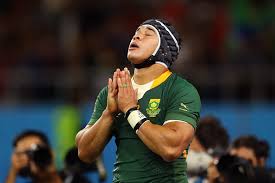
Cheslin Kolbe has been a standout figure in South African rugby, renowned for his electrifying speed, agility, and skill on the field. His contributions to the Springboks, particularly during the 2019 Rugby World Cup, were pivotal in securing South Africa’s third title. However, recent discussions surrounding his future with the national team have garnered significant attention, especially in light of Rassie Erasmus’ role as the head coach and director of rugby. This article delves into Erasmus’ final decision regarding Kolbe’s career with the Springboks, the implications for both the player and the team, and what this means for the future of South African rugby.
The Rise of Cheslin Kolbe
Cheslin Kolbe’s journey to rugby stardom is a testament to talent and hard work. Born on October 28, 1993, in Cape Town, Kolbe grew up in a sporting family and was immersed in rugby from an early age. His early career began at the University of Cape Town, where he displayed remarkable talent, eventually catching the eye of provincial selectors.
Kolbe made his professional debut with the Western Province in 2013 and quickly established himself as a dynamic winger, capable of changing the course of a game with his explosive runs and elusive footwork. His performances in the Super Rugby arena with the Stormers further solidified his reputation, leading to his selection for the Springbok squad in 2018.
A World Cup Hero
Cheslin Kolbe’s most defining moment came during the 2019 Rugby World Cup. His dazzling solo try in the final against England showcased his extraordinary abilities and clinched the victory for the Springboks. This moment not only secured his place in rugby history but also made him a national hero. The triumph resonated deeply with South Africans, who rallied behind the team as a symbol of unity and pride.
However, following the World Cup, Kolbe faced challenges, including injuries that hampered his ability to maintain consistent performance levels. As he battled through these physical setbacks, questions began to arise about his future in the Springbok setup, particularly in light of Rassie Erasmus’ strategic vision for the team.
Rassie Erasmus and the Springboks’ Strategy
Rassie Erasmus took the reins as the Springboks’ head coach with a clear vision to rejuvenate the squad while retaining the winning mentality. His coaching philosophy emphasized a balanced approach, focusing on both physicality and skillful play. Erasmus’ leadership has been marked by a commitment to developing a cohesive unit capable of adapting to different styles of play.
As the Springboks faced international competition, the coaching staff was tasked with evaluating player performances, fitness, and the overall effectiveness of the squad. With Kolbe’s injury woes, Erasmus had to make critical decisions about the team’s composition, especially with an eye on the future and the next World Cup cycle.
Kolbe’s Injury Concerns
Injuries have significantly impacted Kolbe’s ability to consistently contribute to the Springboks. He suffered a serious ankle injury in early 2021, which sidelined him for several months. Although he made a return to rugby, his form fluctuated, raising concerns about whether he could regain his peak performance levels.
Erasmus and his coaching staff were undoubtedly mindful of these concerns. The Springboks required players who could deliver consistently, especially in high-pressure matches. As the team prepared for upcoming international fixtures and tournaments, Kolbe’s injury history became a critical factor in assessing his long-term viability in the squad.
The Final Decision
After thorough discussions and evaluations, Rassie Erasmus made a decisive call regarding Cheslin Kolbe’s future with the Springboks. In a press conference, Erasmus acknowledged Kolbe’s extraordinary talent and contributions but emphasized the necessity for a team that could withstand the rigors of international competition.
Erasmus announced that Kolbe would be released from the Springbok squad for the foreseeable future, citing the need for the player to focus on his rehabilitation and regain full fitness. The decision was not taken lightly, as it meant parting ways with one of the most talented players in the game, but Erasmus insisted that it was in the best interests of both Kolbe and the team.
Implications of the Decision
Rassie Erasmus’ decision to release Kolbe from the Springbok setup carries several implications. For Kolbe, this period presents an opportunity for recovery and reflection. He can use this time to regain his fitness and refine his skills without the pressures of international play. Should he successfully overcome his injury challenges, there remains a possibility for a future return to the Springboks.
For the Springboks, this decision underscores the importance of depth within the squad. The coaching staff must explore other player options to fill Kolbe’s position. Young talents may be given opportunities to shine on the international stage, which could lead to a new generation of players making their mark.
The Future of South African Rugby
The decision regarding Kolbe also raises broader questions about the future of South African rugby. With the next Rugby World Cup on the horizon, the Springboks need to adapt to evolving game strategies and player dynamics. Erasmus is known for his focus on building a sustainable team capable of competing at the highest levels.
The transition period may involve integrating younger players while retaining the core values that have defined South African rugby. Kolbe’s absence could serve as a catalyst for new talent, pushing the boundaries of what is possible within the squad.
Rassie Erasmus’ final decision on Cheslin Kolbe’s future with the Springboks marks a significant chapter in both the player’s career and the trajectory of South African rugby. While it is a bittersweet moment for fans and teammates, it reflects the harsh realities of professional sports, where injuries and performance standards dictate outcomes. As Kolbe focuses on recovery, the Springboks must prepare for a new era, one that embraces change while striving to uphold the legacy of excellence.
Ultimately, the future remains bright for both Kolbe and South African rugby, provided that they adapt, evolve, and continue to embrace the spirit of resilience that has long characterized the Springbok ethos.