

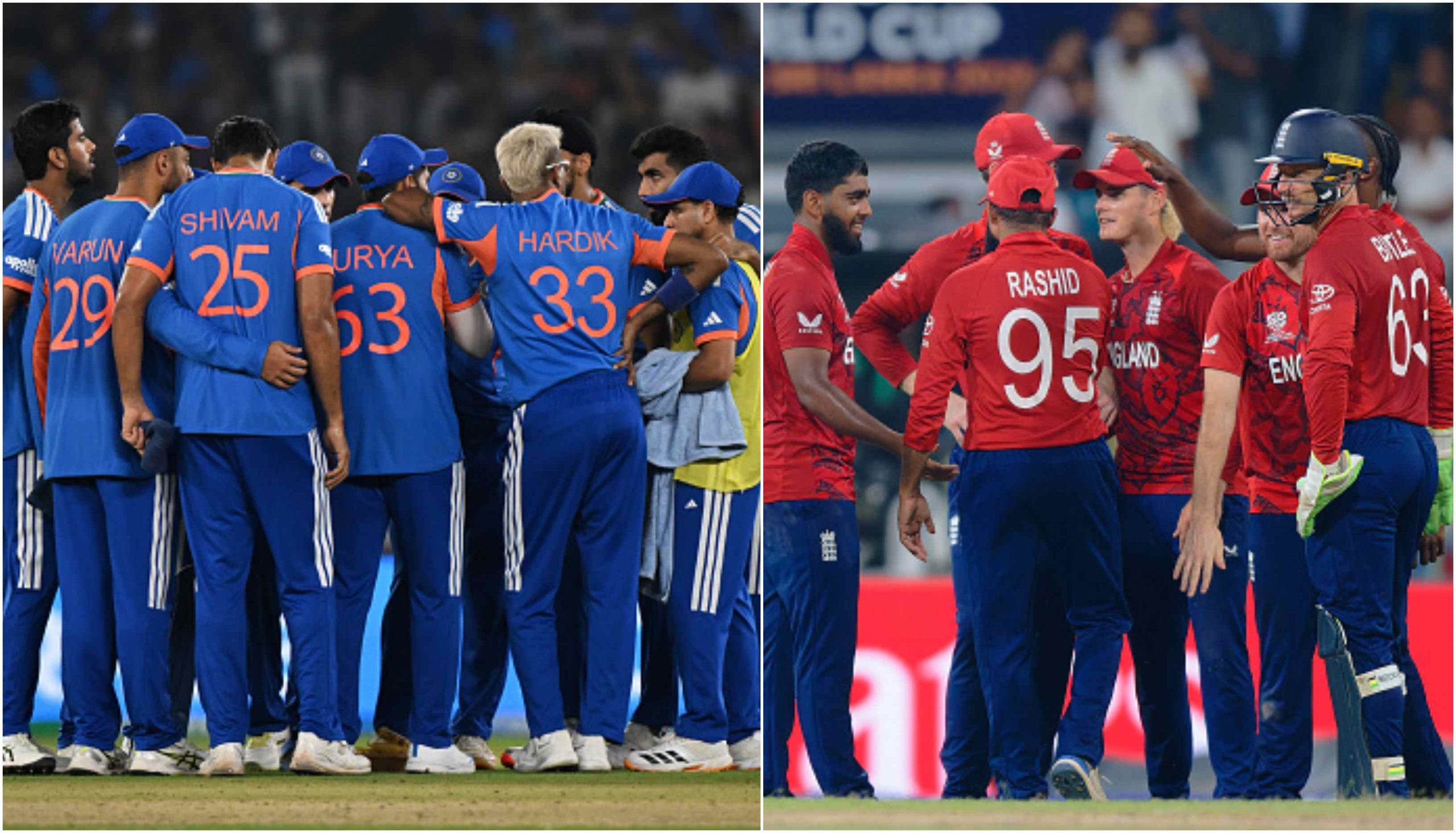
In what will be remembered as one of England’s most complete T20 performances, the hosts etched their name into the history books by securing their first-ever bilateral series victory over India with a resounding nine-wicket win at Bristol’s County Ground. The victory, which gave England an unassailable 3-0 lead in the five-match series, was a statement of intent from a team that is rapidly evolving into a formidable force in the shortest format of the game.

India’s Struggle for Momentum
The evening began with India captain Shreyas Iyer winning the toss and opting to bat first, a decision that seemed prudent on a surface that promised runs. However, what unfolded was an innings that never quite found its footing. The Indian top order, which has been the backbone of their success in recent years, crumbled under the relentless pressure exerted by England’s pace attack.
Teenage sensation Vaibhav Sooryavanshi, who had shown glimpses of his prodigious talent earlier in the series, fell for 15, while Ishan Kishan’s torrid run continued with a meager 4. Abhishek Sharma, fresh from his recent exploits, managed only 16 before perishing to a loose shot. At 48 for 3 in the seventh over, India were already fighting an uphill battle.
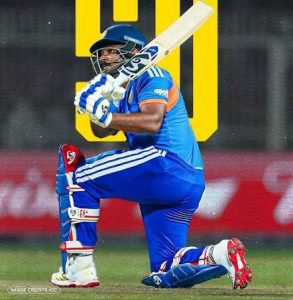
In the midst of this chaos, captain Shreyas Iyer stood tall like a beacon of resilience. His unbeaten 80 off 49 deliveries was an innings of sheer class and determination, adorned with four elegant boundaries and five towering sixes that soared into the Bristol night sky. Yet, even his heroics couldn’t mask the inadequacies of a batting lineup that seemed out of sorts. Shivam Dube’s 22 was the next best contribution, highlighting how heavily India relied on their captain’s brilliance. England’s bowlers were exceptional, with Jofra Archer setting the tone with figures of 2 for 20, ably supported by Josh Tongue’s 2 for 36, as India limped to a modest 158 for 7.
A Chase That Spoke Volumes
If India’s innings was about survival, England’s response was about sheer dominance. The early dismissal of Jos Buttler for 8 threatened to inject a sliver of hope into the Indian camp, but what followed was a partnership that will be talked about for years to come.
Captain Harry Brook and opener Phil Salt joined forces and proceeded to dismantle India’s bowling attack with audacious strokeplay and unshakeable composure. Their unbroken stand of 151 runs was a masterclass in T20 batting, blending power with precision and aggression with intelligence.
Brook, in particular, was in a league of his own. His 79 not out from just 35 deliveries was breathtaking, featuring eight boundaries and four monstrous sixes that left the Indian bowlers shell-shocked. His strike rate of 225.71 was a testament to his aggressive intent and impeccable timing. Salt played the perfect foil, anchoring the innings with a composed 59 off 42 balls, ensuring that the run-rate never dipped below the required level.
The target of 159 was chased down with 37 balls to spare, a margin of victory that perfectly encapsulated England’s superiority on the night. The crowd at Bristol rose to their feet, acknowledging not just a victory, but a performance that signified England’s arrival as a genuine force in T20 cricket.
A Statement of Intent
This series win carries immense significance for England. It wasn’t just about ending their long-standing drought against India in bilateral T20s; it was about sending a message to the cricketing world. With this performance, England have demonstrated that they possess the firepower, the depth, and the tactical acumen to compete against the very best.

For India, the defeat marks their fifth consecutive loss in completed T20 internationals, a worrying trend that will require introspection and regrouping. The series now moves to the final match, but the trophy has already found its home in English hands. As the players walked off the field, it was clear that England’s journey towards T20 supremacy has well and truly begun.