
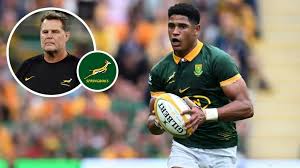
Rassie Erasmus suspends Sacha Feinberg‑Mngomezulu—A stern test of trust and professionalism
Springboks head coach Rassie Erasmus has made the hard decision to suspend breakout fly‑half Sacha Feinberg‑Mngomezulu from the remainder of the Rugby Championship. The cause? A serious breach of trust: Sacha concealed a significant knee injury prior to Test matches against New Zealand, only to be discovered limping. Erasmus—with his reputation for tough, principled leadership—has chosen to act decisively, underlining the non‑negotiable need for honesty in the Springboks setup.
—
🩺 What happened on the field—and off it
During the pinnacle clash against the All Blacks in Johannesburg on August 31, Sacha, then just 22, delivered one of his most electrifying performances, helping lead South Africa to a narrow 31–27 victory. He started the contest unaware that he had damaged knee ligaments. Though he continued on the bench in the second Test in Cape Town a week later and contributed as the Boks secured an 18–12 win, Erasmus noticed the telltale limp—a limp that should have raised immediate concern.
Post-match investigations confirmed what seemed clear: Sacha had deliberately hidden his injury from the coaching and medical staff until after selection. Erasmus revealed publicly:
> “I asked him why he was limping… he said he injured his knee last week”
It was only after those two victorious Tests that Sacha admitted the truth—and soon underwent arthroscopic surgery. He is now sidelined for the rest of the tournament. Erasmus is clear on timing: Sacha will be fit only for the end‑of‑year Autumn Internationals in November.
—
🔍 The coach’s rebuke: accountability and transparency
At a pre‑Argentina press briefing, Erasmus delivered a public rebuke:
> “Nobody who’s got an injury and 80 % ready is better than a Springbok who has no injuries and is 100 % ready… Sacha is lucky that we won those Test matches, because he gambled a bit.”
He went on to emphasise team integrity:
> “One of the things that our players must understand… is that they need to be honest with their injuries.”
This isn’t Erasmus making a scapegoat—it’s a powerful message to any player who might be tempted to play through pain or hide injury. In a code where selection hinges not just on talent, but reliability and commitment, the implication is clear: hiding injuries undermines the collective effort.
—
The ethics of elite sport: weighing risk and reward
Sacha is not just any player—he has emerged as a bright hope for South African rugby, blending Pollard-like accuracy with electric attacking flair. His rise to prominence, including a breakthrough debut penalty against Wales, has drawn comparisons with greats such as Handré Pollard and Manie Libbok. Yet rugby is unforgiving: glossing over even minor injuries can trigger long-term issues, jeopardizing both individual careers and team dynamics.
Reddit commentary reflects broader sympathy:
> “Completely understandable that Rassie is pissed off – kind of one of the basic requirements of a professional player to be honest about your health… It sucks for the Boks… and for SFM who might easily now not play for the rest of the year.”
Another poster highlighted the seriousness of repeat knee injuries:
> “That’s a concern if you get the same knee injured twice in a year… it can lead to the early onset of arthritis…”
The prevailing view? Sacha may have dodged immediate consequences, but at the cost of long-term trust and risking his career progression.
—
Timing and impact: Rugby Championship ramifications
Sacha’s absence coincides with a crucial period in the Rugby Championship. The Springboks had aspirations to seize momentum following top‑class wins over the All Blacks, looking to mount a serious title run—but now structural gaps emerge at fly‑half. Erasmus has pivoted to more experienced options such as Handré Pollard or even combining Pollard with Manie Libbok. The margin for error is slim, and consistency in goal-kicking and game management will remain key.
—
How Rassie might recalibrate selection
In suspending Sacha, Erasmus faces tough calls. Who steps into the fly‑half role? Does he rely on Pollard for leadership, kicking precision, and calm under pressure? Or does he invest more in a younger contributor like Libbok, who offers unpredictable attacking creativity? The coach’s choice will define the team’s strategy through the remainder of this year’s Test cycle and into next year’s Rugby World Cup build‑up.
—
Lessons for Sacha’s future
For the young fly‑half, the suspension is both a setback and a lesson. Erik Erasmus underscored that trust must be earned—and maintained. Sacha stood out at Stormers and earned his national debut, but this incident could shift his career trajectory if not managed well.
Erasmus’s message: admit injuries honestly. The long-term health of both player and team depends on transparency. Protections (e.g., medical clearances) and counsel are there—if players seek them. And Sacha, with surgery and rehabilitation ahead, must address both knee and trust.
Assuming a full recovery, the return in November offers redemption: strong performances in test matches, accountability, and renewed maturity could pave a path not just back into the Springboks 15 but to leadership roles. The coaching staff will want to see a changed approach—a player who places team above self‑image, who collaborates with med‑staff, and takes brunt of accountability with grace.
—
Reflecting South Africa’s culture of excellence
This saga is more than a contract or injury issue—it taps into Springbok values, history and identity. Throughout rugby lore, players have sacrificed bodies for jerseys; but those sacrifices must be intentional and transparent. To conceal pain and risk permanent damage violates the very spirit of the team’s unity.
Erasmus is doing his part—enforcing discipline, honesty, and a culture where the Springboks’ best come not just from raw talent, but integrity and collective responsibility. Pushing hard, but protecting the fabric that has forged Rugby World Cup titles and fierce team unity.
—
Final word: trust lost, respect regained?
Rassie’s decision to suspend Sacha Feinberg‑Mngomezulu sends ripples. The coach has clearly decided that no single talent is bigger than the collective ethic. For Sacha, this is both a reckoning and an opportunity. Rehabilitation will restore his knee—and now, perhaps, with deeper understanding, he can rebuild trust, embrace accountability, and return stronger.
The Springboks, meanwhile, continue their Rugby Championship quest without their rising star. Newcomers and veterans alike must fill the void—not just with runs and kicks, but by upholding the uncompromising honesty at the heart of the jersey. Erasmus’s message is clear: short‑term silence might salvage a match, but long‑term disclosure sustains a legacy.