
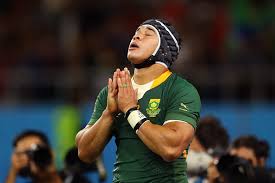
When the Springboks lifted the Webb Ellis Cup in 2023, the rugby world watched in admiration — not just for their performance, but for how they leaned heavily on a core of experienced warriors. From Siya Kolisi and Eben Etzebeth to Duane Vermeulen and Willie le Roux, the squad was rich in leadership, battle scars, and calm under pressure. But with the next Rugby World Cup in 2027 fast approaching, many are asking the same question: can South Africa’s old guard go again, or will it be up to a new generation to carry the flame?
The term “Dad’s Army” was used affectionately (and sometimes critically) to describe South Africa’s aging but formidable squad. While other teams focused on youth and transition, the Boks trusted their veterans — and it paid off. But 2027 presents a new challenge, and the idea of a third consecutive World Cup title will likely depend on how well Rassie Erasmus blends his trusted soldiers with the raw firepower of emerging talent.
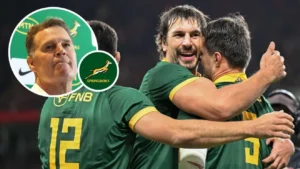
Erasmus, now firmly back at the helm as head coach, is no stranger to transition. He’s known for long-term planning, player development, and building squads with purpose. In 2019, he built a world champion team in just 18 months. In 2023, he did it again — only this time with a core group of players in their 30s. The question now is whether the next generation will be given the platform to grow, or if the Boks will cling too tightly to what’s worked in the past.
Fortunately, South African rugby isn’t short on exciting young prospects. Canan Moodie has already proven he belongs at the top level, showing maturity and flair beyond his years. Jaden Hendrikse, Evan Roos, and Sacha Feinberg-Mngomezulu are just a few of the fresh faces making waves in domestic and international rugby. These are players with energy, speed, and ambition — qualities that could reinvigorate the Springboks’ tactical approach and style of play.
But integrating young players into a team as structured and pressure-heavy as the Boks isn’t simple. Rassie and his team will need to strike a delicate balance — respecting the core that delivered two World Cups, while creating opportunities for younger players to earn meaningful experience. This doesn’t mean a complete overhaul, but a gradual transition where youth can learn from the veterans while bringing their own edge to the team.
At the heart of it all is culture. The Springbok identity is built on more than just who’s on the field — it’s about grit, unity, and resilience. If the next wave of players can buy into that ethos while bringing their own spark, South Africa could be even more dangerous in 2027 than they were in 2019 or 2023.
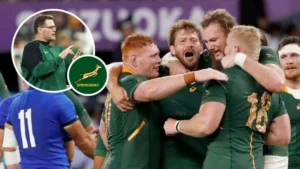
So, can the young bucks spark Erasmus’ “Dad’s Army” back into life for one more glorious run? Time will tell. But if history has shown us anything, it’s this: never count out the Springboks — and never underestimate the power of renewal.
Be the first to comment