
All the Winners of the Male Rugby Player of the Year Revealed: 2001–2010
The IRB (International Rugby Board), now known as World Rugby, established the Rugby Player of the Year award in 2001 to recognize the outstanding individual talent in men’s international rugby. Over the first decade of the award’s existence, some of the most influential and legendary names in the sport were honored. This article takes a comprehensive look at each of the male winners from 2001 to 2010, reflecting on their achievements during their winning year and their legacy in the sport.
—
2001 – Keith Wood (Ireland)
The inaugural IRB Player of the Year award in 2001 went to Keith Wood, the legendary Irish hooker. Known as “Uncle Fester” for his bald head and immense presence on the field, Wood was a dynamic and mobile front-row player who helped redefine the role of a hooker in the modern game.
That year, he was instrumental in leading Ireland to one of their more competitive seasons in the Six Nations. Wood’s tireless work ethic, leadership, and exceptional skills in open play earned him the top honor. He was also a standout during the British and Irish Lions tour to Australia in 2001.
Wood’s win was symbolic—it honored not only a great player but also a transformative figure in forward play, and set a high standard for future recipients.
—
2002 – Fabien Galthié (France)
The 2002 award went to French scrum-half Fabien Galthié, a master tactician and one of the most cerebral players of his generation. By this time, Galthié had already enjoyed a long and storied international career, but 2002 was particularly notable.
Under his leadership, France claimed a Grand Slam in the Six Nations Championship. Galthié’s game management, pinpoint passing, and strategic kicking were central to France’s dominance. He retired from international rugby shortly after but later returned to great acclaim as the head coach of the French national team.
His 2002 performances cemented his status as one of the smartest playmakers the sport has seen.
—
2003 – Jonny Wilkinson (England)
Few players have had a more iconic moment than Jonny Wilkinson in 2003. His extra-time drop goal in the Rugby World Cup final against Australia remains one of the most replayed clips in rugby history. It secured England’s first and only Rugby World Cup title to date.
Wilkinson’s composure, tactical awareness, and unerring kicking ability made him an easy pick for Player of the Year in 2003. That season, he was a metronomic force behind England’s victories, including their Six Nations campaign and their World Cup success.
Though injuries plagued the rest of his international career, Wilkinson’s 2003 performance remains one of the most memorable in the sport’s history.
—
2004 – Schalk Burger (South Africa)
In 2004, South Africa’s flanker Schalk Burger won the prestigious award after a phenomenal season in which the Springboks won the Tri-Nations Championship. At just 21 years old, Burger was a ferocious presence at the breakdown and tackled with relentless intensity.
His physicality, combined with athleticism and an unyielding competitive edge, gave South Africa an edge in forward confrontations. Burger quickly became a fan favorite and was widely seen as the spiritual successor to other great South African back-rowers.
2004 was Burger’s breakout year, and the award recognized his meteoric rise and critical importance to the Springbok resurgence.
—
2005 – Dan Carter (New Zealand)
The 2005 winner, Dan Carter, announced himself as the complete fly-half during an exceptional year for the All Blacks. New Zealand won the Tri-Nations, and Carter was the undisputed star, especially in a legendary performance against the British and Irish Lions in Wellington, where he scored 33 points.
Carter’s blend of tactical kicking, defensive strength, acceleration, and playmaking flair made him a rare talent. At just 23, he was already seen as a generational player, and his performances in 2005 firmly established him as the best in the world.
This was the first of Carter’s three World Rugby Player of the Year awards.
—
2006 – Richie McCaw (New Zealand)
In 2006, the honor went to Richie McCaw, New Zealand’s captain and master of the breakdown. Known for his incredible rugby IQ, tireless engine, and immaculate discipline, McCaw was the heartbeat of the All Blacks’ dominance.
That year, New Zealand won the Tri-Nations again, and McCaw’s leadership and technical brilliance at openside flanker were central to their success. His ability to read the game and win turnovers at crucial moments made him indispensable.
This award was the first of McCaw’s record three Player of the Year wins.
—
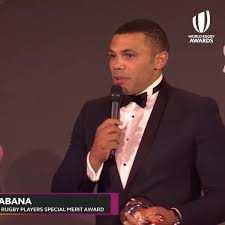
2007 – Bryan Habana (South Africa)
The 2007 Rugby World Cup in France was the defining event of the rugby year, and Bryan Habana was its biggest star. The lightning-quick winger scored eight tries in the tournament, equaling Jonah Lomu’s World Cup record, and helped South Africa to lift the Webb Ellis Cup.
Habana’s try-scoring instincts, speed, and sharp footwork made him a nightmare for defenders. He was a game-changer in every sense and a consistent performer on the wing. His 2007 performances secured him the Player of the Year title and global recognition.
—
2008 – Shane Williams (Wales)
The 2008 award went to Shane Williams, the diminutive Welsh winger who proved that size isn’t everything in rugby. Standing at just 5’7″, Williams relied on his blistering pace, dazzling footwork, and uncanny ability to evade tackles.
That year, Williams was instrumental in helping Wales win the Grand Slam in the Six Nations. He scored six tries in the tournament and finished as the top scorer. His creativity and flair brought excitement to every game, making him a deserving winner of the award.
Williams became a symbol of Welsh rugby’s revival and remains one of their all-time greats.
—
2009 – Richie McCaw (New Zealand)
McCaw claimed his second Player of the Year title in 2009, reinforcing his reputation as one of the greatest players the game has ever seen. Though New Zealand didn’t win the Tri-Nations that year, McCaw’s individual brilliance, consistency, and leadership stood out.
By 2009, McCaw had already surpassed 70 test caps and was the anchor of the All Blacks’ forward pack. His game-reading abilities and influence on the outcome of matches were unmatched, and he was widely respected for his sportsmanship and dedication.
—
2010 – Richie McCaw (New Zealand)
For the third time in five years, Richie McCaw was named IRB Player of the Year in 2010. That season, McCaw led the All Blacks to another Tri-Nations title and was again lauded for his leadership and defensive prowess.
2010 also saw McCaw become the most-capped All Blacks captain, a testament to his consistency and the trust his teammates and coaches placed in him. By now, McCaw was not just a great player but a rugby icon—perhaps the most influential player of his era.
From Keith Wood in 2001 to Richie McCaw’s third title in 2010, the first decade of the IRB Player of the Year award showcased a range of talents: from tactical masterminds and explosive backs to relentless flankers and visionary playmakers.
Each of these players not only dominated their respective years but also helped shape the evolution of rugby. As the game grew in speed, intensity, and professionalism, these men stood at the pinnacle, setting benchmarks that inspired future generations.
Their legacies live on—not just in record books, but in the countless fans, young players, and professionals who aim to follow in their footsteps.
—
Be the first to comment