
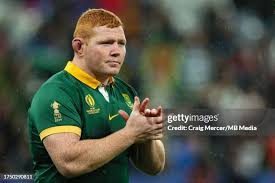
In the world of rugby, few players embody resilience and dedication quite like Steven Kitshoff. A stalwart for the Springboks, Kitshoff has consistently proven his mettle on the field, contributing significantly to his team’s successes, including the prestigious Rugby World Cup victories. However, the shadows of early retirement loom large over his illustrious career, especially following recent neck fusion surgery, which could mark the end of an era for both him and South African rugby.
The Journey of Steven Kitshoff

Born on April 8, 1993, in Stellenbosch, South Africa, Kitshoff’s journey into rugby began at an early age. He attended Paul Roos Gymnasium, where his formidable talent quickly became apparent. His path to professional rugby took flight when he joined the Western Province, and soon after, he made his Super Rugby debut with the Stormers in 2012. Kitshoff’s performances in domestic competitions caught the attention of national selectors, leading to his inclusion in the Springbok squad.
Since his debut for the Springboks in 2016, Kitshoff has become synonymous with power, skill, and an indomitable spirit. His ability to dominate the scrum and excel in open play has made him one of the most respected loosehead props in international rugby. Throughout his career, he has played crucial roles in pivotal matches, showcasing his talent in both the Super Rugby and Test arenas.
The Impact of Injuries
Injuries are an unfortunate reality for professional athletes, and rugby players, in particular, face a high risk of physical setbacks. For Kitshoff, persistent issues with his neck have been a cause for concern in recent years. The wear and tear that comes with playing in the front row, combined with the physical nature of the sport, have taken a toll on his body.
The decision to undergo neck fusion surgery was not made lightly. Such a procedure is often seen as a last resort, indicating the severity of an athlete’s condition. For Kitshoff, it represented a significant crossroads in his career. While the hope is to return to full fitness, the reality of such surgeries means that recovery can be unpredictable, and full athletic capabilities may not always be restored.
The Neck Fusion Surgery: A Turning Point
Neck fusion surgery involves the joining of two or more vertebrae to alleviate pain and stabilize the spine. For a rugby player, especially one in a physically demanding position like prop, this procedure raises several questions about long-term health and career longevity. The risks associated with returning to the sport post-surgery are significant, and for Kitshoff, the stakes are particularly high.
The surgery has left Kitshoff in a period of uncertainty. While he is determined to recover and return to the field, the potential for early retirement looms over him like a dark cloud. The physical demands of professional rugby require not only peak fitness but also a body that can withstand the rigors of the game without risk of re-injury. Given the nature of neck injuries, many athletes find it difficult to regain their previous level of performance, leading some to make the difficult choice to retire early.
The Support System
Throughout his career, Kitshoff has had the support of his teammates, coaches, and the South African rugby community. The Springbok team has long been known for its camaraderie, and this support network becomes even more crucial during challenging times such as recovery from surgery. His teammates understand the physical and emotional toll that such an injury can take and have rallied around him during this difficult phase.
The Springbok coaching staff, led by head coach Jacques Nienaber, have expressed their unwavering belief in Kitshoff’s abilities. They recognize the impact he has made on and off the field and are hopeful for his recovery. However, they also acknowledge the need for a cautious approach to ensure that he does not rush back into action before he is fully ready.
The Future: A Possible Early Retirement?
As Kitshoff navigates his recovery journey, discussions about his future in rugby have intensified. At 31 years old, he is at a stage where many players begin to consider their legacies and the next steps in their careers. If his recovery goes well, he may be able to continue playing at a high level, but the possibility of early retirement remains a pressing reality.
Retirement from professional sports is a significant transition, one that can be both liberating and daunting. For Kitshoff, the prospect of stepping away from the game he loves is sobering. Rugby has been a central part of his identity for as long as he can remember, and the thought of leaving it behind brings mixed emotions.
The Legacy of Steven Kitshoff
Regardless of the outcome of his recovery, Steven Kitshoff’s impact on South African rugby is undeniable. He has not only been a formidable player on the field but also a role model for aspiring rugby players. His work ethic, commitment, and sportsmanship serve as an inspiration to many.
If Kitshoff does decide to retire early, his legacy will be one of excellence, resilience, and unwavering dedication to his team. He has played a pivotal role in shaping the Springboks into a formidable force in international rugby, and his contributions will be remembered long after he hangs up his boots.
As Steven Kitshoff embarks on the challenging path of recovery following neck fusion surgery, the rugby world watches with bated breath. Whether he returns to the pitch or decides to retire, his journey is a testament to the spirit of resilience that defines athletes. The potential for early retirement hangs in the balance, but regardless of the outcome, Kitshoff’s legacy in the sport will endure, inspiring future generations of rugby players.
Be the first to comment